RSS

Blog

Custom Banners and the Middle East Origins of Abraham

In tracing the earliest roots of a people, we find ourselves drawn into the ancient landscapes of the Middle East, where identity, faith, and lineage first took shape. Custom Banners and the Middle East Origins of Abraham reminds us that long before nations were defined, tribes moved across deserts and river valleys, carrying their traditions much like we might today carry custom vertical banners and custom vertical ribbons to symbolize belonging and purpose.

blue customized hanging vertical banner

We begin with the people among whom Abraham was born—ancient Semitic tribes of Mesopotamia. These were pastoral and urban communities living in and around cities such as Ur, a thriving center in what is now southern Iraq. They were not yet “Jews” as we understand the term today, but part of a broader cultural and linguistic group known as the Semites, who spoke related languages and shared certain customs. Their world was one of polytheism, where many gods governed different aspects of life—storms, fertility, war, and the heavens.

Abraham, originally called Abram, is described in biblical tradition as the son of Terah, a man of this Mesopotamian society. His ancestry places him firmly within these early Semitic peoples, who were deeply tied to land, clan, and inherited belief systems. We can imagine their communities marked by symbols of identity—standards of family and tribe, not unlike the custom vertical banners we use today to represent unity, or the custom vertical ribbons that distinguish one group from another in ceremonial settings.

From this background, Abraham’s story takes a decisive turn. According to tradition, he is called by a singular God to leave his homeland and journey toward Canaan, a land that would later become central to the identity of his descendants. This moment is not just geographical—it is ideological. We move from a world of many gods into the emergence of monotheism, a defining shift that would influence vast stretches of human history. The migration from Mesopotamia into Canaan reflects a broader pattern of movement across the Middle East, where tribes adapted, settled, and reshaped their identities.

The people Abraham left behind continued in their established traditions, while his journey marked the beginning of a distinct covenantal identity. In this sense, we can see the formation of a people not as an instant transformation, but as a gradual unfolding—rooted in ancestry, yet defined by new belief. The visual language of identity, whether in ancient standards, or modern custom vertical banners, continues to echo this process of differentiation, and belonging.

Today, when we commemorate heritage, milestones, or shared purpose, we often rely on symbolic presentation. That is where CeremonialSupplies.com comes in, offering a wide and refined selection of ceremonial props designed to elevate any event. Our premium crafted groundbreaking shovels are polished to perfection, balanced for both function and visual impact, making them ideal for landmark ceremonies. The decoration ribbons and grand opening ribbons span a full range of sizes—from elegant 1.5-inch accents to bold 12-inch extra-wide displays—bringing both subtlety and grandeur to any setting.

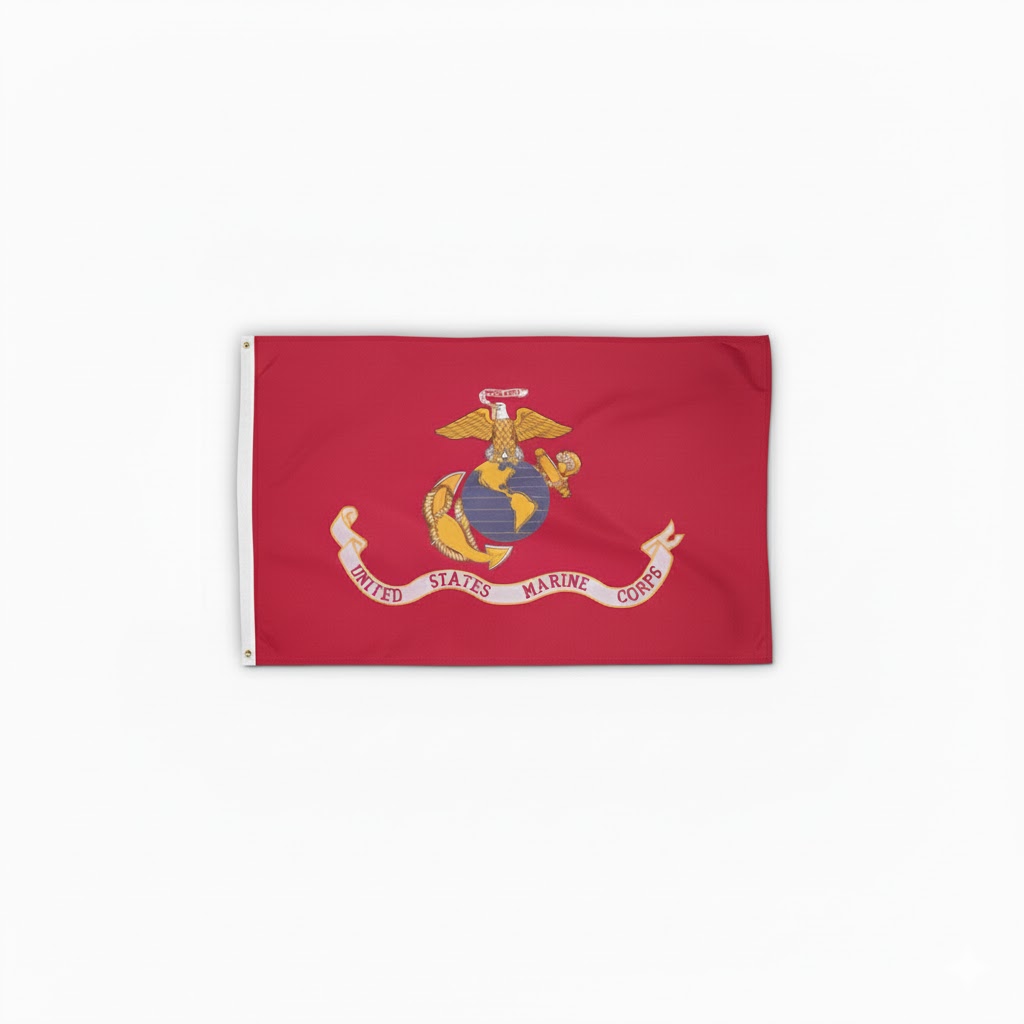
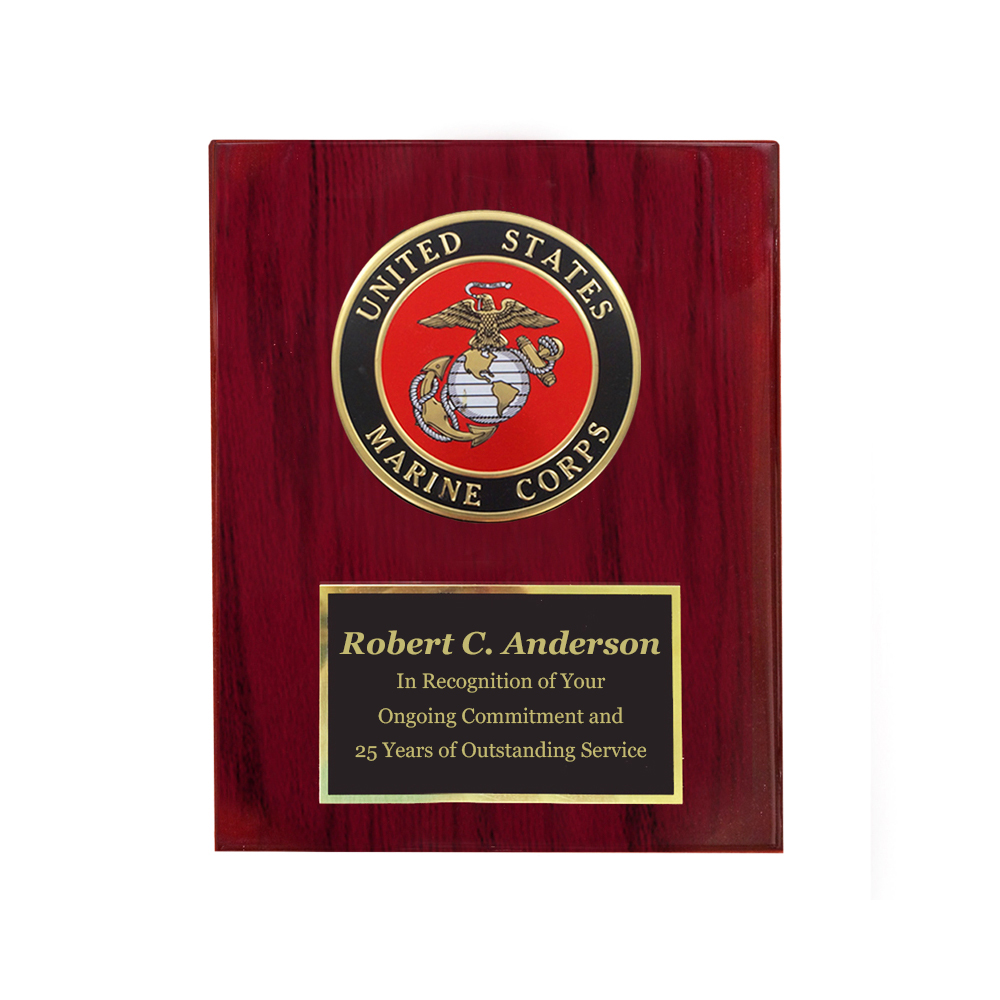
Our inventory extends further to include luxurious event carpets that create a striking entrance, detailed military flags and medals that honor tradition, and embroidered logo clothing that reinforces identity. Branded tablecloths and chair covers add cohesion to any space, while custom signs and step-and-repeat backdrops provide a professional visual anchor. With classic stanchions and rope, retractable belt stanchions, and posts, we offer practical yet elegant solutions for crowd flow and presentation. And of course, our beautifully crafted custom vertical ribbons and custom vertical banners allow for personalized expression at every level.

As we reflect on the story of Abraham’s origins, we recognize that identity has always been both inherited and chosen. From the tribes of ancient Mesopotamia to the unfolding story of a people set apart, the journey is one of movement, meaning, and memory. We invite you to visit CeremonialSupplies.com, connect through our online live chat, or click here for a quote—and bring your own story to life with distinction and purpose.

War, the American flag, and the Use of Custom Ribbons Across Time

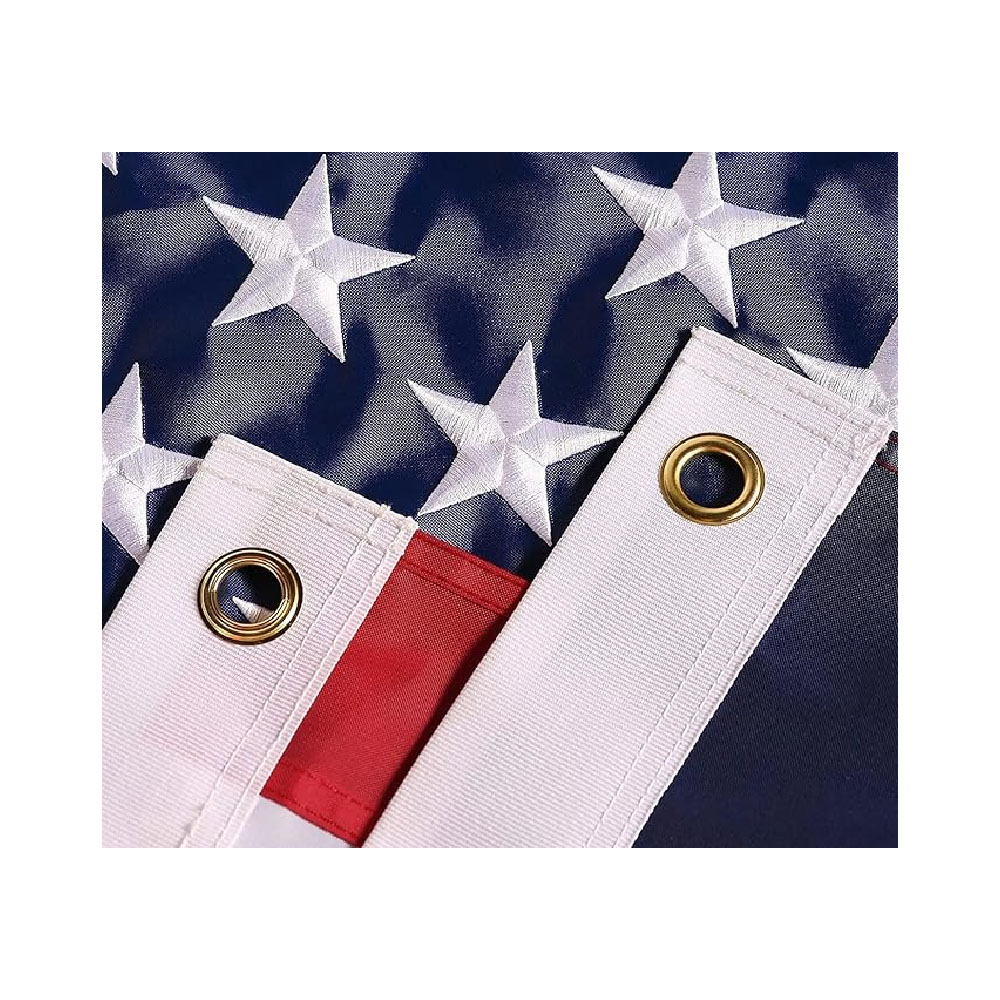
In reflecting on conflict and symbolism, we recognize how deeply identity has been tied to visual markers; war, the American flag, and the use of custom ribbons across time are themes that remind us how humanity has long carried its allegiances into battle. From ancient fields to modern theaters of conflict, we have used banners, colors, and insignia to declare belonging. What once appeared as flowing standards now echoes in the modern American flag, while ceremonial traditions continue through custom ribbons, and patriotic ribbons that commemorate service rather than glorify destruction.

American flag on a pole

In ancient warfare, banners were essential. Armies relied on visible symbols to maintain order in the chaos of battle. Roman legions marched under the signum and aquila, sacred emblems that represented both the unit and the authority of Rome. Persian forces likewise carried ornate standards, reflecting imperial grandeur and divine favor. These were not merely decorative; losing a banner meant humiliation and disorder. The use of color and fabric—what we might today associate with custom ribbons—helped distinguish allies from enemies across vast and noisy battlefields.

When we consider rival empires, the confrontations between Rome and Persia stand as defining examples. For centuries, these two powers clashed across the Near East, each side fielding disciplined armies under richly adorned standards. Their wars were not only territorial but symbolic, with each empire asserting legitimacy through its banners. Similarly, in Asia, rivalries between Chinese dynasties or feudal Japanese clans were marked by distinctive flags and insignia. Samurai carried mon—family crests—into battle, functioning much like early forms of patriotic ribbons, binding warriors to lineage and honor.

As warfare evolved, the function of banners changed. In modern conflict, technology has largely replaced the need for visible battlefield markers. Communication systems, digital identification, and coordinated uniforms have taken over. Yet symbolism has not disappeared—it has transformed. Today, the American flag serves as a unifying emblem not only on battlefields but in ceremonies, memorials, and civic life. Instead of marking positions in combat, it represents ideals, sacrifice, and national identity.

We also see this transformation in ceremonial practices. The spirit once carried by banners now lives on in custom ribbons used for remembrance, dedication, and honor. Events recognizing service often feature patriotic ribbons, carefully arranged to reflect respect rather than rivalry. In this way, we have shifted from using symbols to divide in war to using them to commemorate and unite in peace.

To bring these symbolic traditions into modern ceremonies, you can count on CeremonialSupplies.com, known for our unique and comprehensive selection of ceremonial props. Our premium crafted groundbreaking shovels feature polished finishes and balanced designs, ideal for high-visibility events. Our decoration ribbons and grand opening ribbons are available in a wide range of sizes—from refined 1.5-inch accents to striking 12-inch extra-wide pieces—offering bold visual impact. Our inventory also includes posh event carpets, finely detailed military flags and medals, embroidered logo clothing, and branded tablecloths and chair covers that elevate presentations. With classic, retractable, and crowd-control stanchions paired with elegant rope systems, along with fully customizable ribbon décor, we provide everything needed to create meaningful, visually cohesive events.

As we look back, we must acknowledge that while banners once rallied armies, they also marked division and conflict. Today, the American flag, along with custom ribbons and patriotic ribbons, offers us a chance to reinterpret those symbols toward unity. At this stage in human development, we should question whether large-scale war is something we ought to outgrow. The pageantry of conflict may be ancient, but the cost remains deeply human. We should strive to be beyond it. We invite you to visit CeremonialSupplies.com, connect with us through our online live chat, or click here for a quote—and let your next event reflect meaning, dignity, and purpose beyond conflict.

Women of History Celebrated With Honors, Custom Ribbons, and Remembrance.

There are many women of history celebrated with honors, custom ribbons, and remembrance during March’s Women’s History Month. Countless extraordinary women have shaped the course of civilization and as we gather to celebrate their leadership, courage, and discovery, we often decorate memorial spaces with custom ribbons, elegant grand opening ribbons, and striking vertical banners that reflect the spirit of the occasion. Through these symbols we honor women whose influence still resonates across centuries.

Cleopatra – Last Pharoah of Egypt

One of the earliest figures worthy of recognition is Cleopatra VII, the last active ruler of Ptolemaic Egypt, famous for her alliances with Julius Caesar and Mark Antony. Cleopatra lived during a time (69 BC – 30 BC) of intense political struggle between Rome and the ancient Mediterranean kingdoms. She was not only known for diplomacy and intelligence but also for mastering multiple languages and maintaining Egypt’s independence for years in the face of Roman expansion. Her leadership demonstrates how strategic vision and political skill could shape global events. In celebrations today, halls adorned with custom ribbons and vertical banners help create a regal atmosphere befitting the legacy of a queen.

Elizabeth I

Another powerful woman of history is Elizabeth I, who ruled England from 1558 to 1603. Her reign, often called the Elizabethan Age, brought stability after years of religious conflict. Elizabeth’s leadership helped defeat the Spanish Armada and encouraged cultural flourishing in literature and theater. Her ability to navigate political alliances while strengthening her nation made her one of history’s most influential monarchs. Ceremonial gatherings that recognize such leadership often feature grand opening ribbons and custom ribbons to symbolize renewal and triumph.

red ribbon

Joan of Arc

Courage and faith define the story of Joan of Arc. A young peasant girl in fifteenth-century France, (1412 – 1431) Joan, believed she was guided by divine visions to help defend her country during the Hundred Years’ War. She inspired French troops and helped lead them to significant victories. Though she was later captured and executed, Joan’s bravery made her a lasting symbol of conviction and sacrifice. When communities commemorate such heroic figures, displays of vertical banners and flowing custom ribbons can reflect the solemn dignity of remembrance.

Marie Curie

Science was forever transformed at the end of the 19th century by Marie Curie, whose discovery of radium, and groundbreaking work in radioactivity changed medicine and physics. Curie became the first woman to win a Nobel Prize and remains the only person to win Nobel Prizes in two different scientific fields. Her discoveries opened the door to modern cancer treatments and reshaped scientific understanding of atomic energy. Celebrations of innovation often highlight achievements beneath elegant grand opening ribbons and thoughtful displays that symbolize progress.

Catherine the Great

The woman who cemented Russia's rich cultural advancements, Catherine the Great, who ruled Russia during the eighteenth century and oversaw dramatic expansion of the empire. Catherine championed education, encouraged the arts, and sought to modernize governance. Her reign transformed Russia into one of Europe’s dominant powers. Formal commemorations of such achievements are often enhanced by refined décor, including vertical banners and ceremonial displays that reflect imperial grandeur.

To create events worthy of these remarkable women, we often turn to CeremonialSupplies.com, a trusted name with a hard-earned reputation as the best one-stop shop on the net for high-profile event props and accessories. Our extensive selection includes beautifully crafted decoration ribbons and grand opening ribbons available in a wide variety of lengths and widths from elegant 1.5-inch ribbons to dramatic 12-inch extra-wide designs. We also offer premium custom ribbons, impressive vertical banners, ceremonial scissors, and many other decorative essentials that help transform any event into a memorable celebration.

As we honor women whose courage, intellect, and leadership changed history, the right presentation brings their stories to life. Visit CeremonialSupplies.com and speak with us through our live online chat, or click here for a quote to begin planning your next remarkable celebration.

Custom Ribbons in Women’s History Month Celebrate and Commemorate

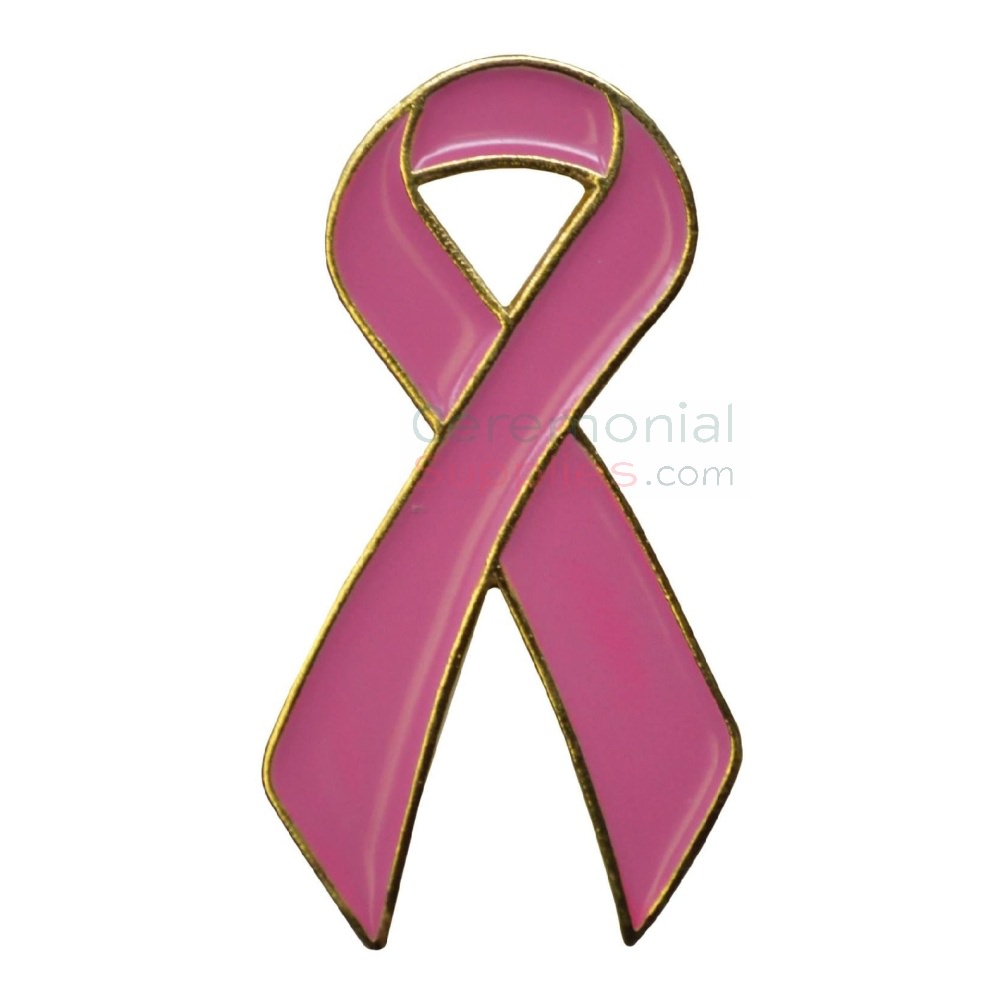
Custom ribbons in Women’s History Month celebrate and commemorate the achievements, struggles, and enduring legacy of women throughout history. We honor the trailblazers who fought for equality, from suffrage leaders to modern pioneers, and we do so with vibrant displays of custom ribbons, pink ribbons, and decoration ribbons that bring color and meaning to every gathering.

hot pink ribbon

We trace the idea back to 1978 when a group of dedicated women in California proposed Women’s History Week to recognize the often-overlooked contributions of women in American society. The National Women’s History Project led the effort, and by 1987 Congress officially declared March as Women’s History Month. Since then, we have celebrated it every year with events, educational programs, and public tributes. Pink ribbons, custom ribbons, and decoration ribbons have become popular symbols in these observances, representing strength, compassion, and unity.

We love decorating with custom ribbons, pink ribbons, and decoration ribbons during Women’s History Month. Schools hang them across hallways, libraries tie them around displays of books by women authors, and community centers use extra-wide versions to frame portraits of historical figures. Pink ribbons, custom ribbons, and decoration ribbons flutter from light poles and wrap around podiums during marches and speeches, creating a visual reminder of the progress women have made.

CeremonialSupplies.com has earned a stellar reputation online as the best one-stop shop dedicated to ceremonial and celebratory event products. Their premium crafted groundbreaking shovels feature mirror-polished chrome blades and elegant hardwood handles perfect for dedication ceremonies. Their decoration ribbons and grand opening ribbons come in luxurious satin and crisp grosgrain from delicate 1.5-inch widths to dramatic 12-inch extra-wide ribbons that make bold statements. Event carpets in rich jewel tones create stunning pathways, military flags and medals add solemn pride, embroidered logo clothing keeps participants looking sharp, branded tablecloths and chair covers transform spaces into polished venues, and wedding and birthday ribbon decorations including full-color branding bring personal touches. Elegant stanchions and rope with gold posts ensure graceful crowd flow while many more decoration essentials and props complete every celebration.

As we reflect on the courage of women past and present, we continue to weave custom ribbons, pink ribbons, and decoration ribbons into our observances. Pink ribbons, custom ribbons, and decoration ribbons remind us that every step forward was earned through determination and solidarity. We invite you to visit CeremonialSupplies.com online chat, or click here for a quote.
St. Patrick’s Day Celebrations Adorned With Green Custom Ribbons

St. Patrick’s Day celebrations adorned with green custom ribbons, green balloons, green bows, and green carpets capture the spirit of heritage, migration, and joyful public celebration that defines March 17 across the world. As we reflect on the legacy of St. Patrick and the remarkable journey of Irish immigrants to the United States, we see how tradition, symbolism, and pageantry combine to create some of the most visually sophisticated celebrations of the year.

lime green carpet runner

Beginning in the early nineteenth century and accelerating during the Great Famine of the 1840s, millions of Irish men and women crossed the Atlantic seeking opportunity and survival. They arrived in cities such as Boston, New York, and Philadelphia, where they built communities that preserved Irish traditions while embracing American life. Parades, music, and civic celebrations emerged as expressions of pride, with banners, custom ribbons, and festive decorations marking neighborhoods that had become vibrant Irish-American centers.

Over time, St. Patrick’s Day evolved into one of the most elaborate cultural celebrations in the United States. Cities like Chicago, New York, and Savannah host grand parades featuring marching bands, civic leaders, and community organizations. Streets transform into ceremonial corridors lined with green carpets and crowd posts, guiding dignitaries and performers through the heart of the festivities. At major events, elegant event carpets welcome honored guests and frame entrances with theatrical flair, creating a sense of occasion that blends civic pride with festive exuberance.

green stanchion rope

Sophisticated celebrations often incorporate layered décor elements to reinforce the theme of Irish heritage. Festive arches, banners, and decorative displays are enhanced by green ribbons in different hues, such as emerald green, hunter green, basic green, lime green or even neon green in varied widths and lengths that ripple in the breeze, while custom ribbons highlight ceremonial moments such as parade openings or commemorative dedications. Grand entrances lined with green carpets and event carpets add a polished visual anchor to the celebration, elevating a community gathering into a memorable spectacle.

To achieve this level of presentation, many organizers turn to CeremonialSupplies.com, a leading destination for ceremonial and decorative event materials. We proudly offer a wide assortment of decoration design props that transform ordinary spaces into unforgettable settings. Our inventory includes decoration ribbons and grand opening ribbons available in lengths and widths ranging from elegant 1.5-inch ribbons to dramatic 12-inch extra-wide styles. These luxurious custom ribbons are crafted with rich textures and vivid color saturation, ideal for creating striking ceremonial moments.

Our premium flooring selections include plush event carpets and vibrant green carpet runners that establish a formal pathway for processions, parades, or gala entrances. We also provide beautifully detailed military flags and medals, embroidered logo clothing, branded tablecloths and chair covers, wedding and birthday ribbon decorations with custom branding, polished stanchions and rope systems for guiding guests, and a wide array of additional decoration essentials designed to elevate any event.

green ribbon

From community parades to formal galas celebrating Irish heritage, the thoughtful combination of décor elements—from green ribbons to luxurious green carpets—helps bring the spirit of St. Patrick’s Day to life in a visually stunning way. We invite you to visit CeremonialSupplies.com to explore our full collection of ceremonial décor and event materials. Chat with us through our online live chat, or click here for a quote, and let us help you create a celebration worthy of the occasion

The Legacy of St. Patrick's Day Celebrated with Green Custom Ribbons


The legacy of St. Patrick's Day celebrated with green custom ribbons, reminds us that the story of the patron saint of Ireland begins with humble Christian roots and a life shaped by hardship, faith, and perseverance. As we reflect on this legacy, we often mark the day with symbols of Irish heritage such as a bright green ribbon, festive gatherings, and vibrant displays of green event accessories that bring communities together in celebration.

emerald green ribbon

The man who became St. Patrick was born in the late fourth century in Roman Britain to a Christian family. His father served as a deacon and local official, while his grandfather was believed to be a priest. Though Patrick later admitted that he was not deeply devoted in his youth, his life changed dramatically when he was kidnapped by Irish raiders and taken to Ireland as a slave. During his captivity, Patrick turned to prayer and the Christian teachings of his upbringing. That period of isolation strengthened his faith, shaping the spiritual mission that would later define his life. When he eventually escaped and returned home, he felt compelled to bring Christianity back to Ireland. Over time, his missionary work transformed the religious landscape of the island, and symbols like the green custom ribbon became associated with Irish identity and the memory of his teachings. St. Patrick is credited with introducing Christianity in Ireland using the Shamrock to explain the trinity.

Tragedies on St. Patrick’s Day

St. Patrick’s Day is most often remembered for joyful parades and gatherings, where we decorate streets and halls with a flowing green ribbon and other green event accessories that reflect Ireland’s verdant landscape. Yet history reminds us that even festive dates can coincide with difficult events. On March 17, several notable tragedies have occurred across the world. In 1969, Golda Meir becomes Prime Minister of Israel on March 17 amid intense regional tensions that would later lead to conflict across the Middle East. In 1992, on March 17, a bombing outside the Embassy of Israel in Buenos Aires caused devastating loss of life and shook the city. In 2003, the United States launched major phases of the Iraq War, marking the beginning of a long and controversial conflict. On St. Patrick’s Day in 2015, violent clashes erupted in several global political demonstrations, and in earlier centuries natural disasters and accidents were also recorded on the same date. These events remind us that history is complex, and even days of celebration can carry echoes of sorrow.

green ribbon

Despite those moments, St. Patrick’s Day continues to represent renewal and shared cultural pride. Communities gather with music, food, and pageantry, often adorning stages and entrances with a bright green custom ribbon and coordinating green event accessories that capture the spirit of Irish heritage. Decorative displays, banners, event carpets and runners, and ceremonial entrances framed with a sweeping green ribbon transform public spaces into vibrant celebrations of identity.

To bring those celebrations to life, CeremonialSupplies.com offers an arsenal of ceremonial props and event décor. Our premium crafted groundbreaking shovels are polished and balanced for both symbolic and functional impact, making them ideal centerpieces for civic and corporate ceremonies. The company also provides decoration ribbons and grand opening ribbons in a full spectrum of colors and widths from elegant 1.5-inch accents to dramatic 12-inch extra-wide ribbons that command attention. Our collection of green event accessories includes vivid ribbon décor, coordinating event carpets, and ceremonial accents designed to complement themed celebrations.

green carpet with polished chrome stanchions and green rope

CeremonialSupplies.com also carries beautifully detailed military flags and medals, embroidered logo clothing that elevates organizational branding, and richly woven tablecloths and chair covers that transform event spaces with sophistication. Our wedding and birthday ribbon decorations offer personalized branding options, while polished stanchions and rope systems create graceful flow for guests and dignitaries. Whether marking a cultural holiday, civic dedication, or festive gathering, a carefully placed, green, custom ribbon, and thoughtfully arranged décor, will make the moment unforgettable. We invite you to explore the full collection and bring your celebration to life. Visit CeremonialSupplies.com and chat through our online live support, or click here for a quote.
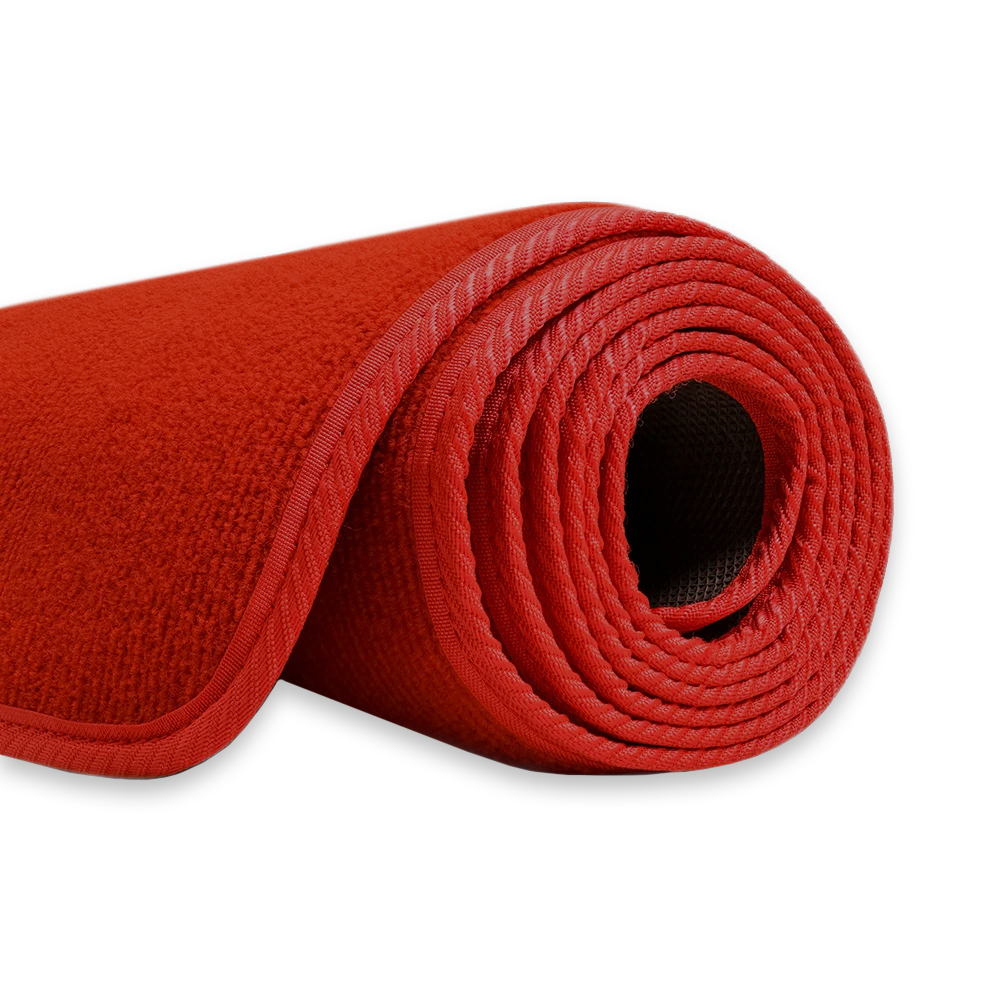
 

February and Carpet Runners at the End of the Roman Year

February and carpet runners at the end of the Roman Year marked a solemn threshold in ancient Roman life. Long before February became the second month of the calendar, it stood as the final chapter of the year—a period devoted not to celebration, but to reckoning, purification, and remembrance. Romans believed the year had to be spiritually cleansed before renewal could occur, and February became the ritual space in which the living settled accounts with the dead, the gods, and one another. Movement through sacred space during this month was intentional and symbolic, much like the careful placement of carpet runners guiding participants toward moments of consequence.

red carpet

When February closed the year, Roman ritual life intensified. The month’s very name derived from februa, objects and rites of purification. Homes were swept, temples washed, and the city itself symbolically scrubbed clean. These acts were not metaphorical niceties; they were understood as necessary for survival in the coming year. Public rituals unfolded along prescribed paths, with priests, magistrates, and families processing in solemn order—an experience modern observers might liken to walking across event carpets that defined sacred boundaries and transitions.

One of the most important observances was Parentalia, held from February 13 to 21. During these days, families honored their ancestors with quiet devotion. Tombs were visited, garlands laid, wine poured, and simple offerings of bread or grain left for the spirits of the dead. Public business largely ceased. Temples closed. The living acknowledged that the dead still had claims upon them. These rituals emphasized continuity rather than loss, creating a sense of procession through time itself, reinforced by communal movement and spatial order reminiscent of event carpets leading toward memory and obligation.

red carpet runner with stanchions and red velvet rope

The conclusion of Parentalia was Feralia, a darker and more urgent rite. On this final day, Romans sought to appease restless or neglected spirits. Offerings were made to prevent the dead from wandering among the living. This was the true closing of the year—a ritual sealing of boundaries. Women often performed household rites, scattering offerings and reciting formulas meant to calm the unseen. Symbolically, Feralia drew a final line between past and future, much as event carpets can mark the end of one ceremonial phase and the beginning of another.

Another key February rite was Lupercalia, held mid-month. While later remembered for its fertility aspects, it also functioned as a cleansing ceremony for the city itself. Priests ran ritual circuits around Rome’s oldest spaces, striking participants lightly to purify them. This movement through the urban landscape followed ancient routes, reinforcing sacred geography. Such structured passage through space echoes the role event carpets play in shaping how people move, focus, and experience meaning during formal occasions.

February also honored the god Februus, associated with purification and the underworld. Unlike later months tied to growth or conquest, February looked backward. It was a month of humility, memory, and moral accounting. Floors were swept, thresholds marked, and ritual objects placed with care—functions not unlike custom mats that define entrances and signal shifts from ordinary to sacred space.

red stanchion rope

Which calendar system endured longer: February as the last month or February as the second? Historically, February served as the final month from Rome’s early calendar reforms through the Republican era, roughly from the 7th century BCE until Julius Caesar reformed the calendar in 46 BCE. Since the Julian calendar—and later the Gregorian—February has been the second month for over two millennia. In sheer duration, February as the second month has now lasted far longer than its earlier role as the year’s end.

Modern ceremonial design still borrows from these ancient instincts. Structured movement, symbolic flooring, and threshold markers matter. CeremonialSupplies.com stands as the most complete one-stop shop available online for upscale personalization of ceremonial shovels and acccessories, launch and grand opening printed ribbons and decorative ribbons, ceremonial scissors, stanchions and rope systems, premium carpets, elegant carpet runners, finely finished custom mats, and a full range of ceremonial décor essentials. Our products emphasize craftsmanship, symbolism, and flow—qualities Romans would have recognized. Thoughtfully placed custom mats establish presence, carpet runners guide procession, and layered flooring choices echo traditions that once defined February’s sacred purpose.

From ancestor veneration to citywide purification, Roman February rituals remind us that endings require intention. Whether ancient rites or modern ceremonies, meaning still unfolds across space—measured, deliberate, and grounded, like custom mats beneath one’s feet and custom mats anchoring memory at the threshold of renewal. Chat live online with CeremonialSupplies.com or click here for a quote.
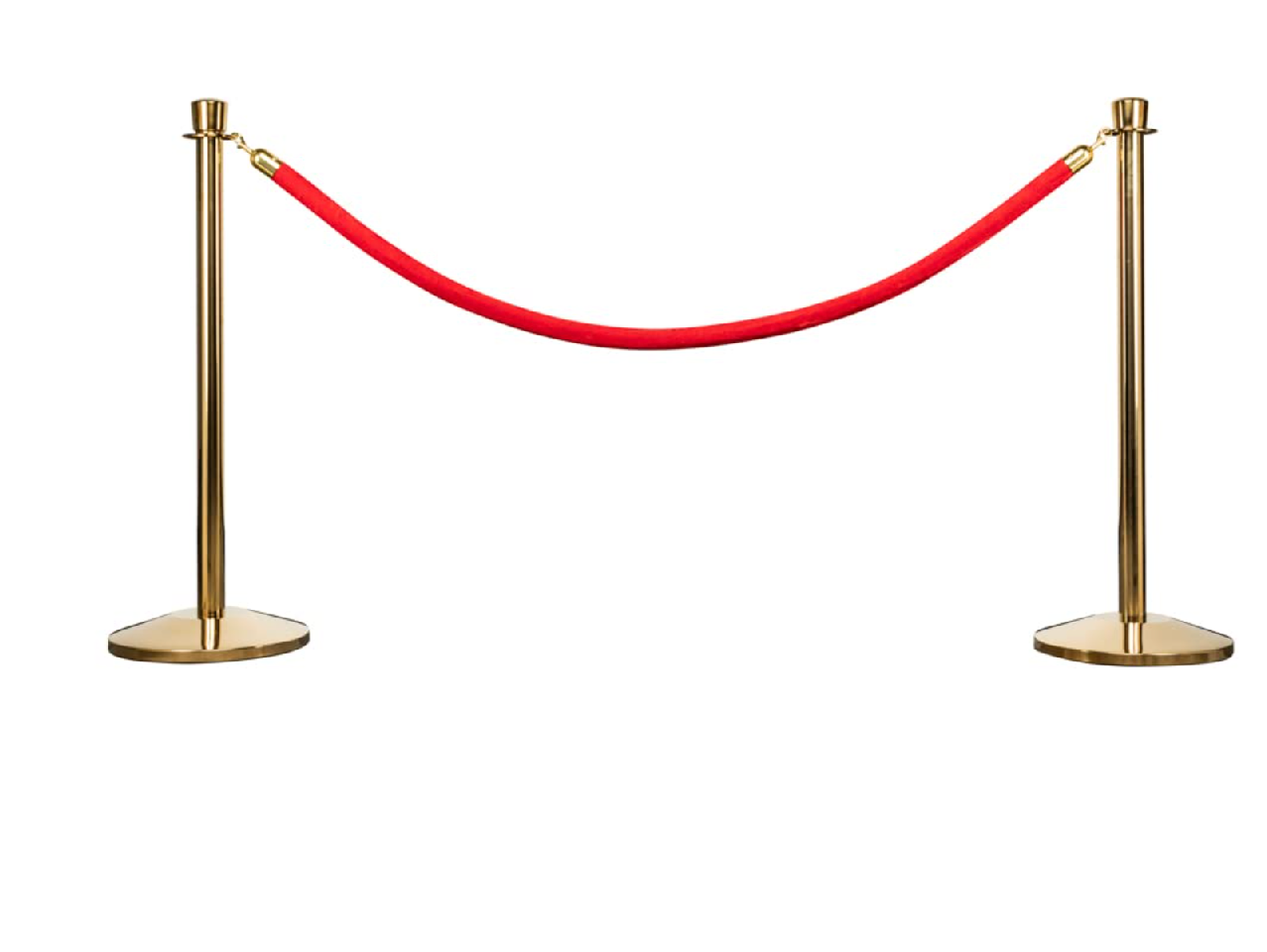
Scandal on the World Stage Laid Bare on Event Carpets

Scandal on the world stage laid bare on event carpets is an apt way to describe how February has repeatedly become the month when justice vs injustice, power, and spectacle collide. Across centuries, some of history’s most sensational and polarizing trials either opened, climaxed, or delivered verdicts in February, unfolding like grim theater before anxious publics. These proceedings were not quiet legal affairs; they were performances of authority, fear, and morality, often carried out on symbolic ground as carefully staged as modern event carpets.

purple aisle runner

One of the earliest infamous February trials is that of Galileo Galilei. In February 1633, Galileo was formally summoned to Rome to face the Inquisition for defending heliocentrism. Though the verdict came later, the February proceedings ignited Europe. The trial symbolized the collision between observation and doctrine, turning a scientific debate into a public reckoning. The pageantry of authority surrounding the tribunal foreshadowed later courtroom spectacles, with entrances and processions that today might be framed by ceremonial aisle runners.

February is also inseparable from the Salem witch trials, which reached a fever pitch in February 1692. Accusations, examinations, and imprisonments escalated rapidly during that month in colonial Massachusetts. Testimony relied on spectral evidence and fear rather than proof, creating a courtroom environment driven by hysteria. These hearings divided communities and families, demonstrating how quickly law can become theater. The formal walk into the meetinghouse, stripped of dignity, contrasts sharply with the controlled symbolism we now associate with event carpets guiding proceedings.

yellow aisle runner

In February 1921, the trial of Sacco and Vanzetti began in Massachusetts, immediately polarizing the world. The defendants’ political beliefs, immigrant status, and the climate of postwar fear shaped public perception as much as evidence did. Protests erupted internationally, and the courtroom became a global stage. Each entrance and exit of the accused was watched like ritual, echoing the way ceremonial aisle runners frame moments of deep unfair stereo-typed immigrants, as instigated as usual by the “media”, forming groups who were ready to lynch these two young men without a thread of even circumstantial evidence. Justice and Law have nothing to do with each other it seems.

Another February spectacle unfolded in 1946 with the opening phases of the Nuremberg Trials. While the tribunal began earlier, February marked critical testimony that exposed the mechanics of genocide to the world. These trials were unprecedented in scale and gravity, redefining international law. The courtroom itself was designed to communicate solemn authority, much as event carpets are used today to visually underscore importance and order in formal settings.

More recently, February 1995 brought one of the most televised trials in history to its climax: O. J. Simpson resumed testimony after a dramatic recess, drawing millions of viewers daily. The trial blended celebrity culture, racial tension, and criminal law into a media phenomenon. Cameras transformed the courtroom into a stage, with every movement scrutinized. The choreography of entrances, so familiar now, recalls the guiding function of ceremonial aisle runners in shaping attention and expectation.

lime green aisle runner

Across centuries, these February trials reveal a pattern: justice becomes most volatile when fear, ideology, or celebrity dominate the proceedings. The visual language of authority—how participants enter, where they stand, how space is controlled—matters as much as words. That same awareness of symbolism carries into modern ceremonial design.

This is where CeremonialSupplies.com brings refinement and intention to public events. CeremonialSupplies.com offers an extensive selection of premium event carpets in rich textures and deep hues, custom branding aisle runners crafted to display logos or messages with crisp precision, durable ceremonial aisle runners designed for repeated use, elegant floor mats for formal entrances, plush carpets that command attention, and coordinating stanchions and ropes to define space with clarity. Their carpet selections transform entrances into statements, ensuring movement through a space feels deliberate, dignified, and memorable. Whether for historic commemorations, court-related ceremonies, or formal public events, these products elevate atmosphere through craftsmanship and visual impact, seamlessly integrating event carpets and ceremonial aisle runners into meaningful settings.

History shows us that trials are never just about law—they are about spectacle, symbolism, and the human need to witness judgment unfold. February, time and again, has been the month when that spectacle reaches its peak. Chat live online with CeremonialSupplies.com or click here for a quote.